The First Contact
People sometimes remember what they were doing when life-changing events occur. The date I received the first contact from a recruiter offering me an opportunity to work in Hong Kong is definitely important to me, but I cannot recall what I was doing. I have tried to remember my routine on a Tuesday night after work back in August 2016. As this is my very first post, let’s assume I was enjoying watching Daredevil, which was my favourite show at the time. Not that it really matters, but it is nice to think about how your life is about to change when you least expect it.

Daredevil: my favourite show at the time.
The recruiter, Fay, said they were “… currently seeking a risk modelling professional …” to be based in Hong Kong. When I first read it, I thought it was a scam. Why would a headhunter reach out to someone in Peru to fill a job opportunity in a well-known financial hub1? I read the InMail one more time, but I was still feeling skeptical, so I went to sleep shortly after watching how Stick saved Matt and Elektra from being murdered by a bunch of ninja assassins.
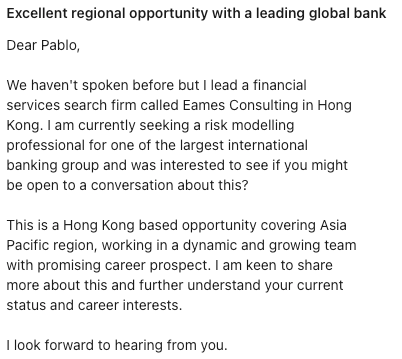
The next morning, I ran some checks on Fay’s account and the firm she worked for. I believe we all have our own ways to figure out if an account is fake, after years of experience using social media platforms (or maybe after being scammed a few times!). I concluded her account was legitimate, so I shared my CV and personal information. One week later, we had our first WhatsApp call, which kicked-off a long recruiting process.
Long process, long flight
The recruiting process doesn’t feel too long for me now, as it happened almost seven years ago. However, my first working day in Hong Kong was seven months after the first contact. I still remember how I used to keep my family updated. From “mum, there is this job opportunity in Hong Kong, but it seems like a long shot”, or “dad, I will have a work interview at 11 p.m., so, don’t worry, I will not be talking while asleep”, to “all, I’ve accepted the offer”, and finally to “my visa has been approved, I’ll be relocating next month”.
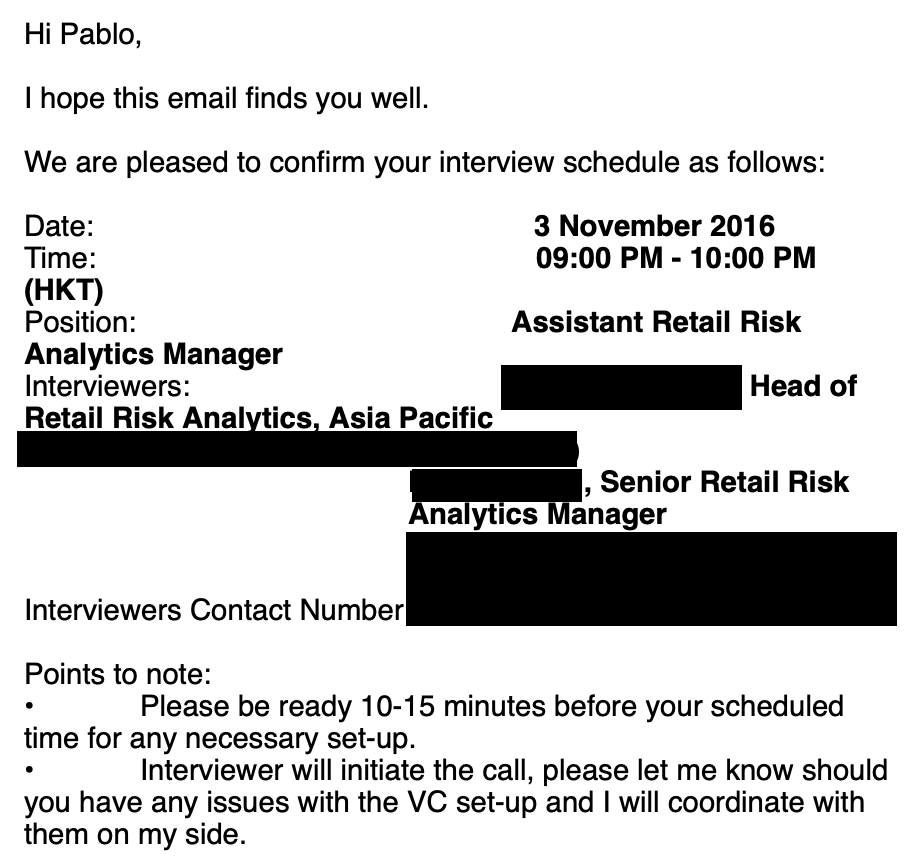
I went through a few rounds of interviews with whom will become my future teammates in the Risk Analytics department. I clearly remember how I struggled to explain the technicalities of my job duties. I had studied the theory in university and applied those concepts at work using Spanish to communicate my thoughts. I will eventually write a post about that, but to provide more context:
- In Peru, English is a common subject in school, but you cannot expect much with 3-4 hours per week (unless you study in a bilingual school), especially if it is not used on a daily basis.
- In university, you are encouraged to read books in English, especially for advanced topics. However, classes are conducted in Spanish (tests are in Spanish too).
- If you want to practice your English, you can watch subtitled movies or TV. That helps to improve your reading and vocabulary, but not your speaking.
Anyways, I managed to convince the hiring manager I was fit for the job2. The team was international, so I reckon that was not the first time they heard someone explain Credit Risk concepts with a couple of “interesting” terms.
There were multiple other parties involved in this process, such as the people conducting background checks, in-house talent acquisition, the relocation company, etc. However, dealing with them was much easier as most of the communication happened via email. Having a 13-hour time difference between Lima and Hong Kong, it was my first time seeing how an email enquiry would take a few extra hours to be replied. I use to wake up and immediately check my inbox expecting to have either a final response or a request for more information.
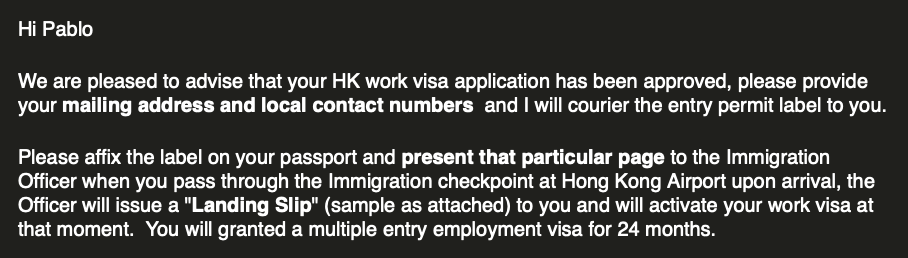
The background check and visa application processes were the stages that kept me on my toes for the longest time. Convincing the hiring manager was definitely the hardest part, but once you pass that stage, you feel like anything could spoil the final outcome. The long wait ended on February 14, 2017, when I received the visa confirmation via email. I do recall what I did on this day. It was a Tuesday and it was Valentine’s Day. I was single and did not have any plans, so I decided to go out to celebrate. I keep some memories, but some of them are gone. It was a memorable blackout as I woke up in my bed at 2pm without my phone. Perhaps, to be elaborated in another post…
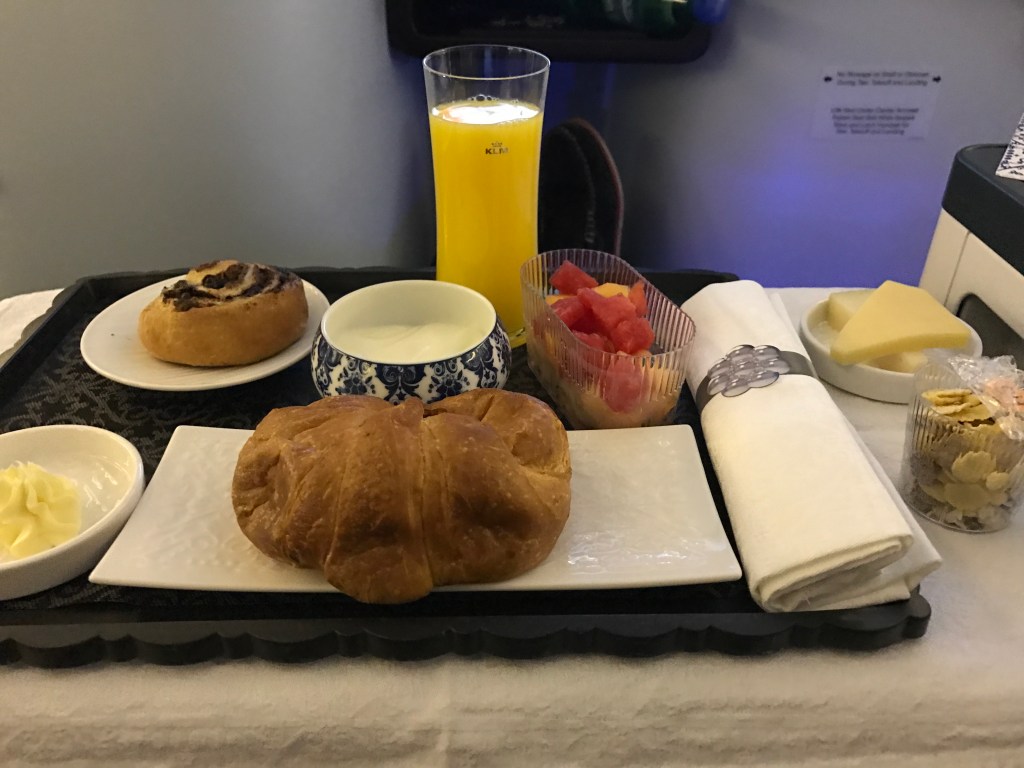
March, 2017. First haul: Lima -> Amsterdam. I had the privilege of spending a total of 25 hours in business class on my journey to Hong Kong.
The Reasons
A few months later after I finally moved to Hong Kong, Fay and I became good friends. I decided to ask her about that unexpected InMail and the reasons why she reached out to someone working in South America to relocate to Asia. She finally explained to me that it was not only my work experience, but also the fact that I have a Chinese surname. She thought I had family in Hong Kong.
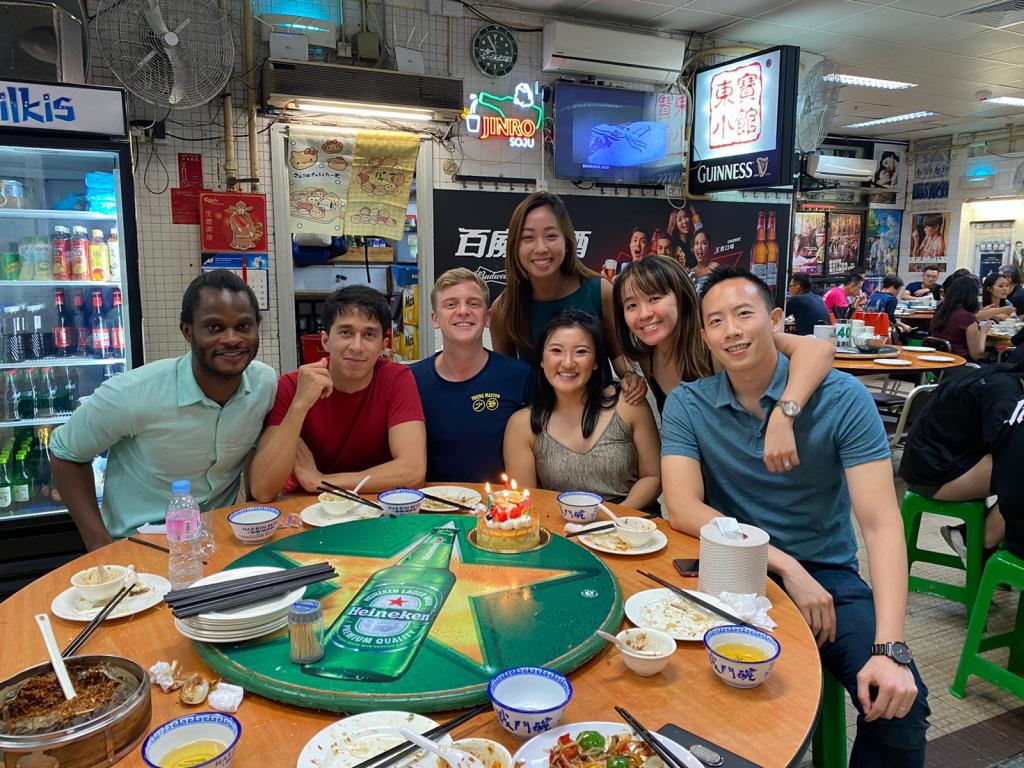
As I look back, I understand a couple of things I did that made me reachable on LinkedIn for such an opportunity: (1) having a bilingual LinkedIn profile, and (2) NOT ignoring my roots. I had always kept a bilingual LinkedIn profile, as a way of practicing my writing skills in English, while Spanish is my mother tongue.
Regarding my roots, my mum is Chinese-Peruvian. In Peru, we have two surnames, which makes our full names very long compared to some countries in Asia. Your dad’s surname goes first. So, my second surname is Chinese. Some people decide to skip one of them in their social media profiles. Luckily, I’ve always kept both, which caught my recruiter’s eye during her search.
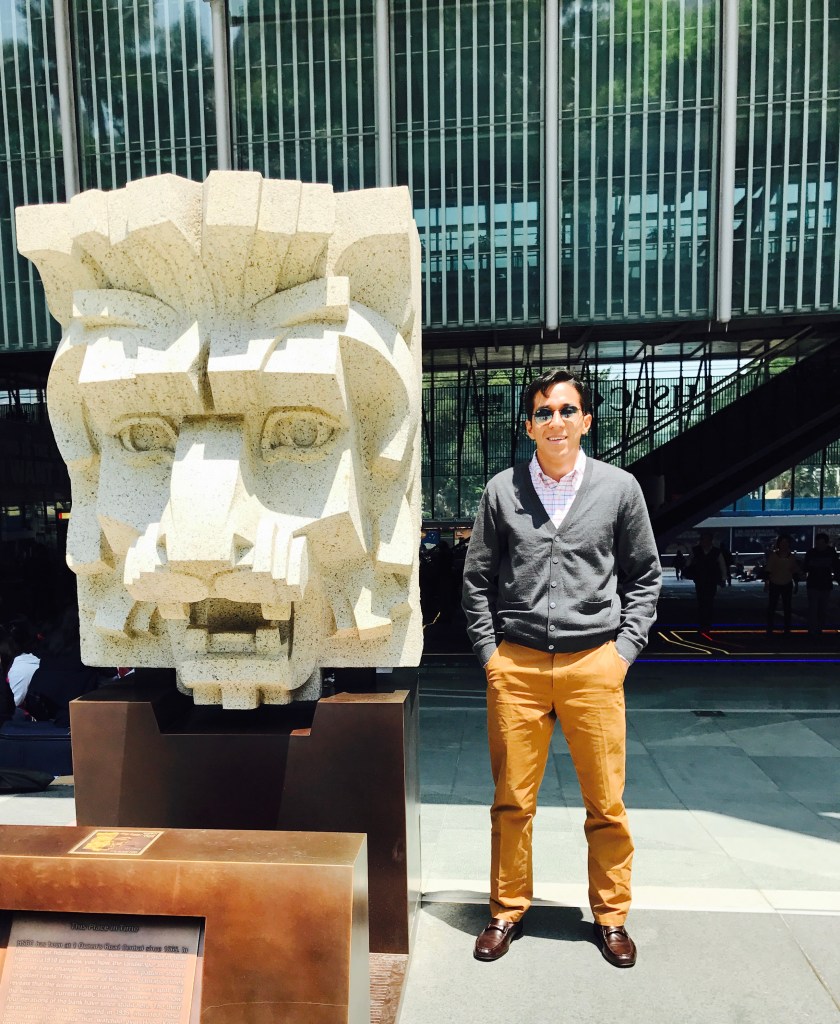
Exploring the city before my official start date.
Embracing the Unexpected
Looking back, I can’t help but marvel at how the unexpected can shape our lives. That initial contact for a job in Hong Kong was a turning point that opened up a world of possibilities. Reflecting on the journey, a few key lessons have stayed with me:
- Taking a Leap of Faith: Embrace the unknown and step out of your comfort zone.
- The Power of Networking: Connections can open doors you never thought possible.
- Overcoming Language Barriers: Learn to adapt and communicate effectively.
- Patience in the Process: Good things take time, and the reward is worth it.
- Embracing Change: Find growth and resilience in new experiences.
Life can change in an instant, so seize opportunities and embrace the unknown. Take that leap of faith and embark on your own life-changing journey.
Note
Ok, that last bit was done by AI, can you tell? I prefer to do it myself, but I guess I am “embracing” new technology. Thanks for reading my first post!
- In Hong Kong, I usually need to explain where my country is located. A few sentences I normally use are: “It’s in South America”, “It’s next to Brazil”, “Machu Picchu is in Peru”. ↩︎
- I studied English at a language centre when I was in secondary school, where I completed the Advanced level. There is no way I could have had an interview in English with what I learnt in school only. ↩︎

 Pabs Explores
Leave a reply to Abhishek Rao Cancel reply