Japan is arguably Hong Kongers’ favourite travel destination1. I have talked to many friends and ex-colleagues who travel to Japan once or twice a year. Some of them go for the food, others go to practice winter sports, and some others enjoy cultural and/or nightlife activities. Regardless of the reason, I must start this post by saying that now I know why people visit this country so much. Or at least, I understand some of the reasons, having chosen Tokyo as my first city. Still, I would not only travel to Japan (or Taiwan2) leaving other countries unexplored. Although there is a phrase we use in Spanish that could well describe this situation, which translates to “you taste it better when you repeat it3“.
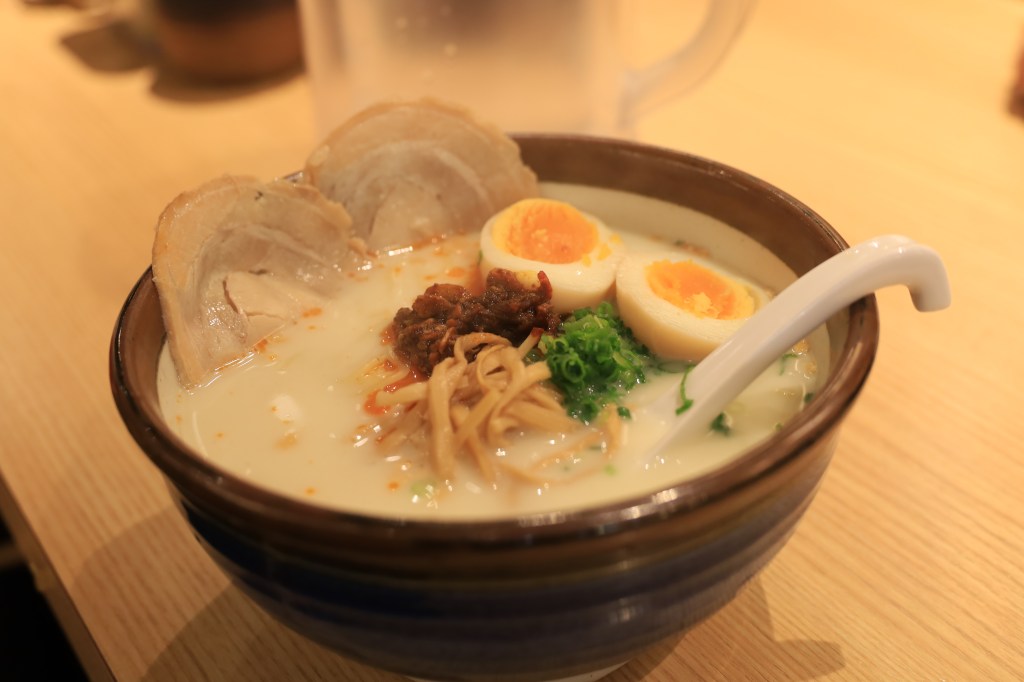
Timing could not have been better, as my flight to Tokyo departed on the day of my seventh anniversary in Hong Kong. Also, at the time of this trip, the JPY/HKD exchange rate was around 12% cheaper compared to the same period in 2023. I was off to a good start, but my whole experience almost got spoiled towards the end, for reasons I will explain in part 2. However, part 1 will also include some travel tips and general information that might be helpful for your next trip, if you ever plan to visit Japan.
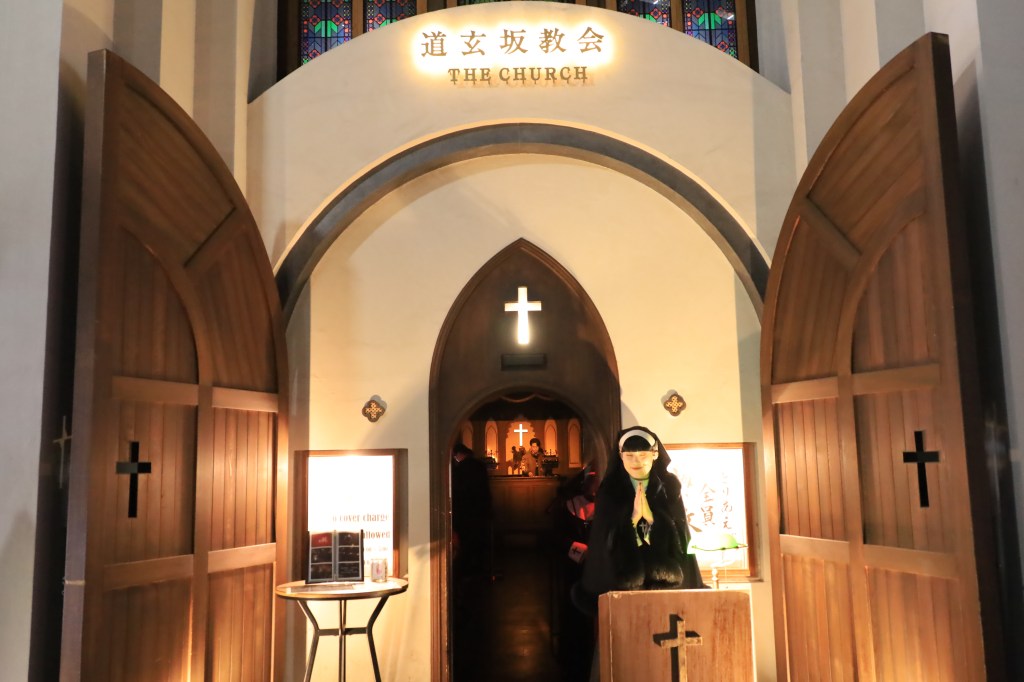
First day: having a highball in a church-like bar in Shibuya
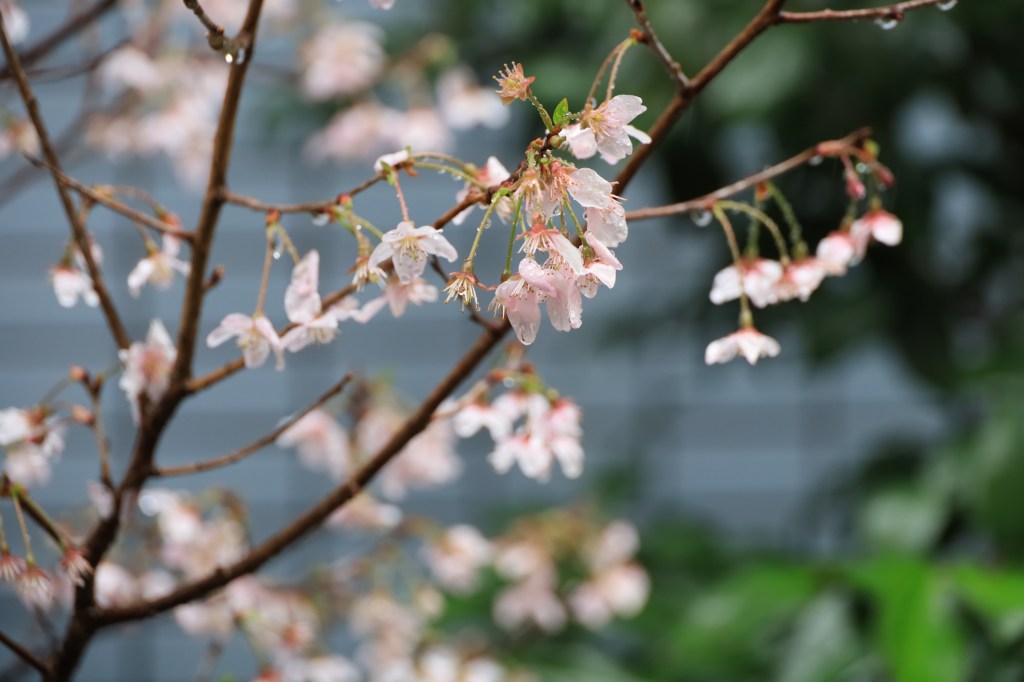
The cherry blossom season was forecasted to start on my first day in town, however, weather conditions deteriorated a couple of days before my arrival. Sadly, there was only one sunny day predicted during my trip.
I arrived in Tokyo (Narita airport) at 15:50. I felt a cool and pleasant breeze as I walked through the tunnel between the plane and the arrival gate. I had purposely checked-in a half-empty luggage, as I thought I would need to buy some winter clothes to survive Tokyo. Nevertheless, the puffer jacket I wore on the plane was enough to keep me warm.
I cleared immigration and customs within 30 minutes. Once you fill the two-in-one online arrival form (immigration and customs), you just need to submit the generated QR code and your passport to the immigration officer. For customs, the process is similar, except it is automated (no human interaction). I had been told that people in Japan are not good in English, however, airport staff are proficient and ready to help you if required. Same applies to staff at the train station. I approached the machine to buy a ticket to Shibuya station, with an interchange at Nippori, as suggested by my host friend. I explained this to one of the ladies working near the ticket machines, and she said: “Why don’t you take the JR Narita Express, which will take you directly to Shibuya?”. I nodded and thanked her after she pointed at a different queue. I had no cash at that point, so I paid with credit card and headed to the train platform.
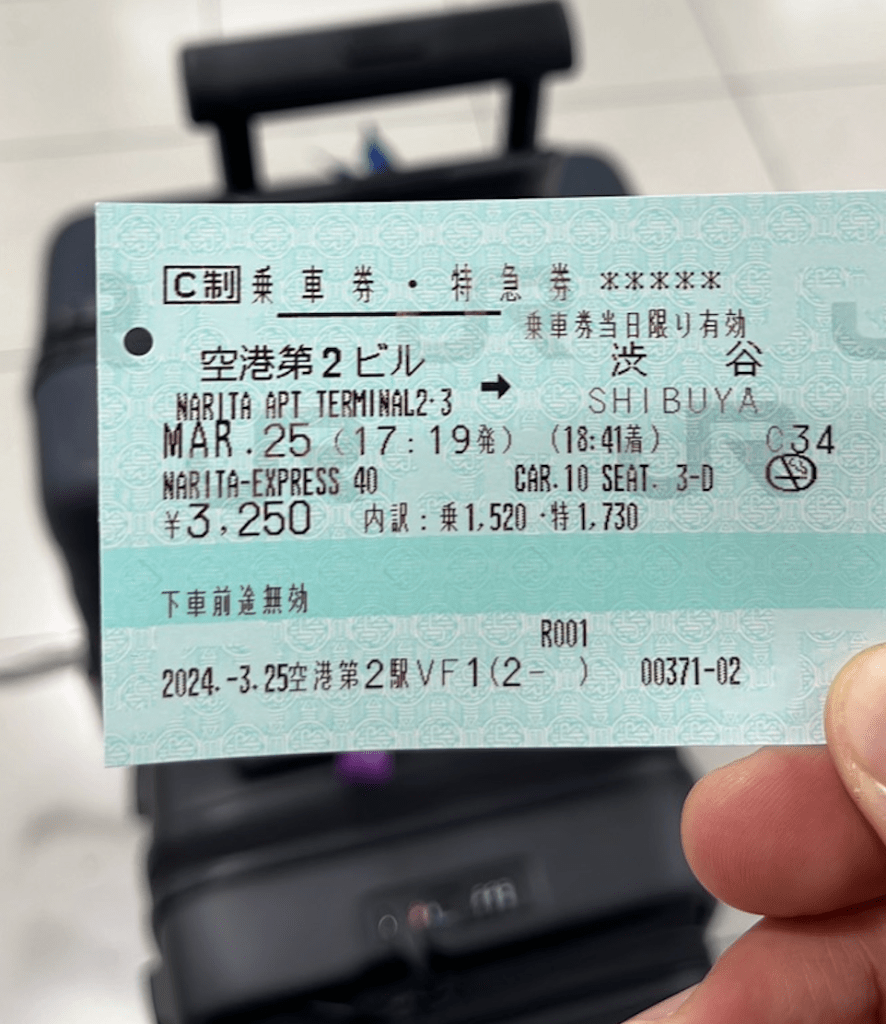
Once at Shibuya station, it took me a while to find my way out to meet my friend. It was 18:50, 3 hours after my arrival, so the station was packed. Shibuya station is one of the busiest railway stations in the world. Outside, it was drizzling, but not enough for us to need an umbrella. We walked for about 15 minutes to his place, each of us with one luggage, dragging them on the rocky sidewalks while looking at the neon ads, shopping malls, restaurants, and all the buzz of a financial district.
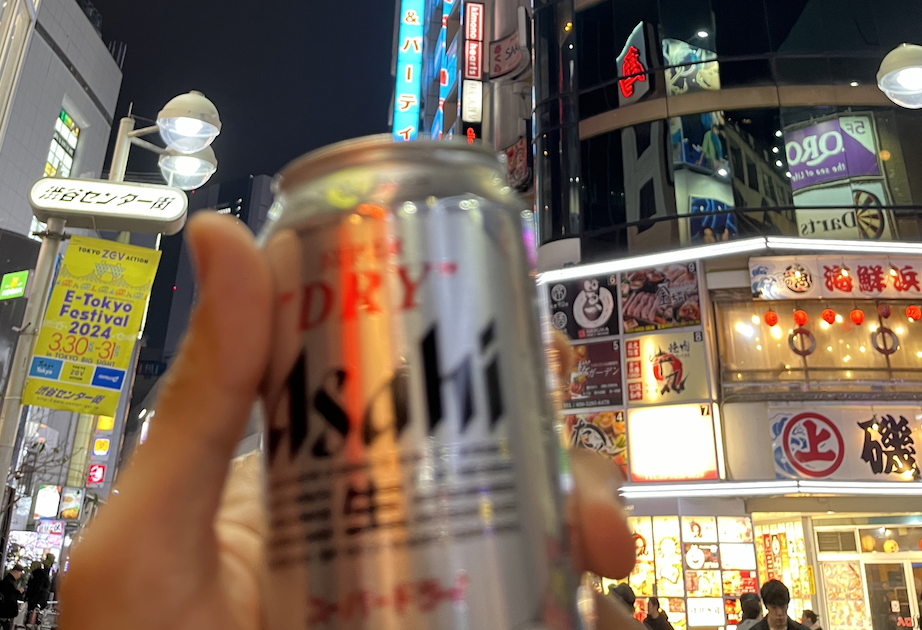
We went out for dinner after dropping my bags. I chose ramen as the weather felt perfect for it. We checked a popular ramen joint, but left immediately after realising the waiting time was at least 60 minutes, with people queueing under the rain. One other friend had told me to not worry too much because any restaurant with a decent Google rating would be good4. We found a ramen shop5 with a shorter queue and paid for two bowls of ramen before getting our seats 15 minutes later. Enough time to grab a beer, so why not drinking a couple of Asahis to boost our appetite. I asked my friend whether it was ok to drink on the street. A young man ahead of us overheard our conversation and turned back to us saying it was ok, so the three of us had a nice chat while waiting for our turns.
Second day: exploring Asakusa and Ginza under the rain
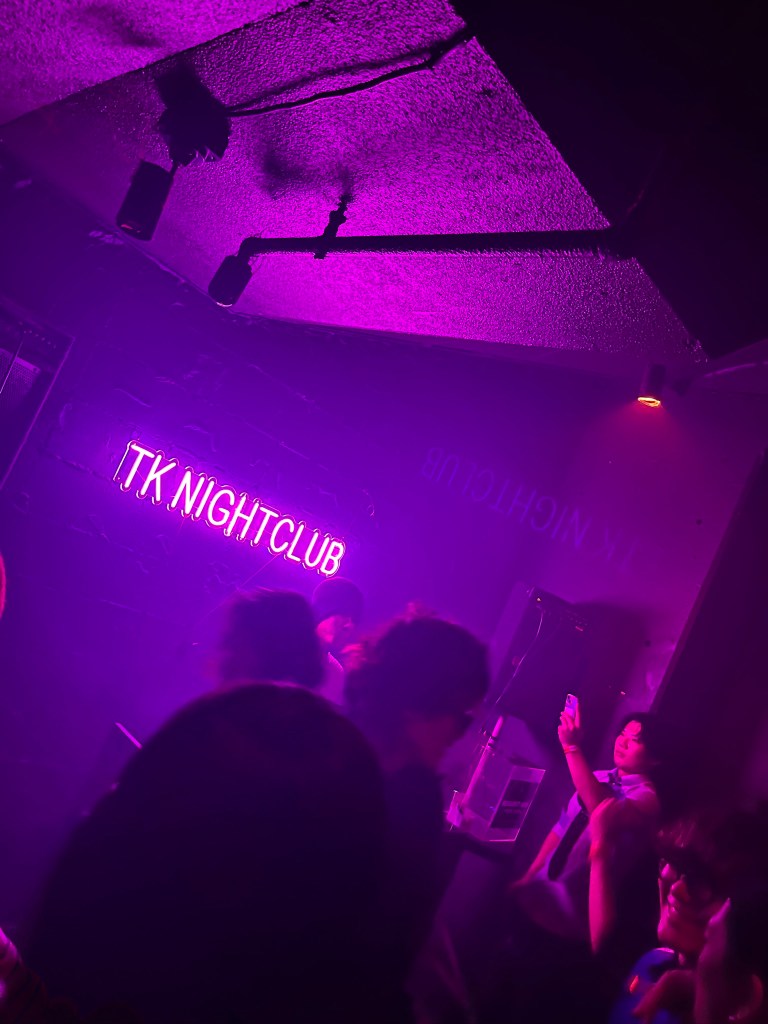
I woke up at around 10 a.m.. The air mattress my friend had setup in his living room was comfortable enough to prevent me from waking up earlier as him and his wife were getting ready to work. Or perhaps I had too many drinks the previous night. It was the young man’s last night in town, so he was keen to explore Shibuya one last time. I decided to join him for a “couple of drinks”, but every man knows what that means. We split after dinner and agreed to meet later. My host friend decided to stay as he had to work the next day. That was a wise call. I went back home at around 4:00 am after having another bowl of ramen and rice with omelette at the same restaurant we had dinner.
I showered and packed some clothes and everything else I needed for a one night stay. The plan was to explore other places having a closer base. I left my friend’s place one hour later and headed to Asakusa station. On my way to Shibuya station, I purchased Japanese yen. I had heard about some issues with the local travel card, and the need for cash in most shops and restaurants. In reality, I mostly used cash for transportation, while the rest of transactions were paid using credit card. I could’ve gone semi-cashless if I had purchased the travel card.
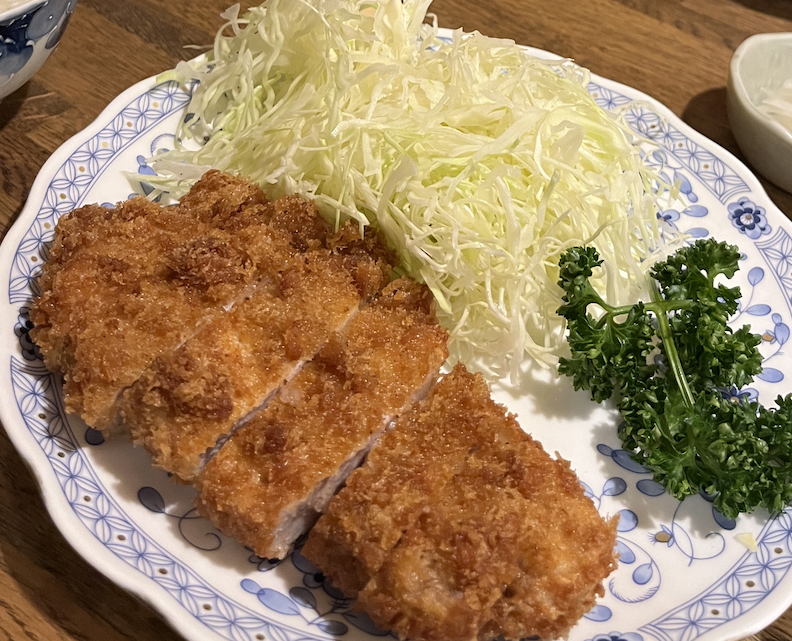
By the time I arrived at Asakusa station, I was starving, as I hadn’t had breakfast. The next meal I wanted to have was pork cutlet with rice. I had tried it many times in Hong Kong and was keen to try it in Tokyo. I headed to Tonkatsu Yutaka6, a few blocks away from the station. Once at the restaurant, I ordered a pork sirloin cutlet set, which included miso soup and rice. The service, food, and ambience were superb. I was surprised by how quiet the restaurant was, being able to hear everyone else when they talk to the waiter/waitress, as there is no music or significant background noise. This is one more thing to appreciate about Japan, which I also experienced when I took public transportation.
Weather conditions got worst over lunch. I borrowed an umbrella from my friend, but I was also carrying my luggage, so I found taking pictures in such conditions very challenging. You need two hands to hold your camera to take pictures, and one more for the umbrella, while your luggage could be left uncovered from the rain. Using my armpit to hold the umbrella didn’t work well, and I was running out of ideas. Eventually, I found myself taking pictures under structures that provided some cover, or just standing under the rain for a few seconds to take a few shots. I could not take as many pictures as I wanted, and the ones I took were not as good given the grey sky.
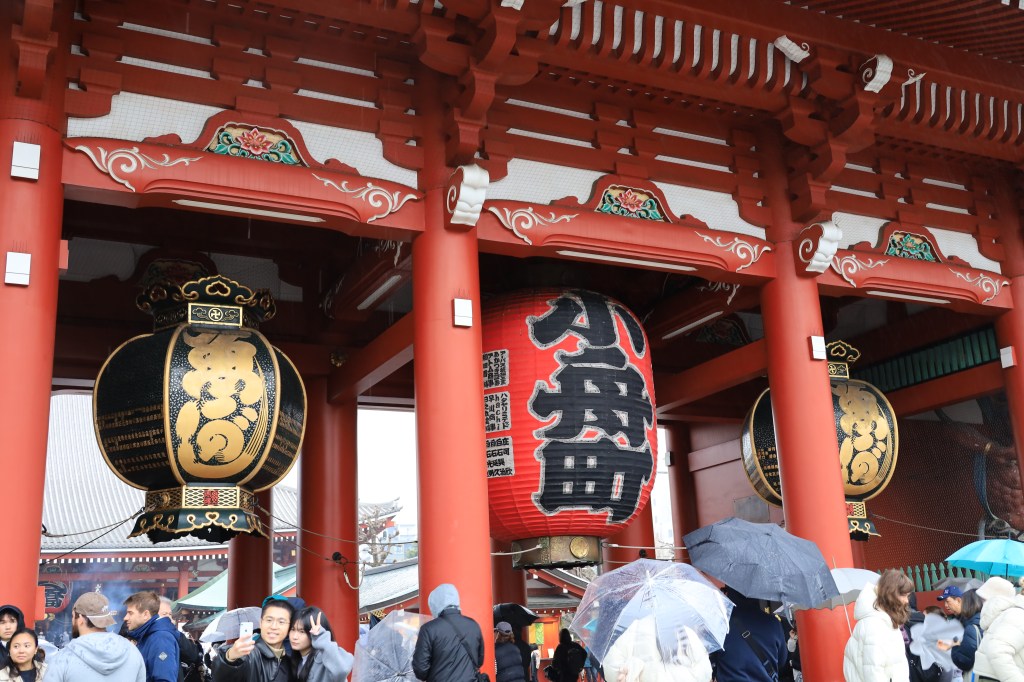
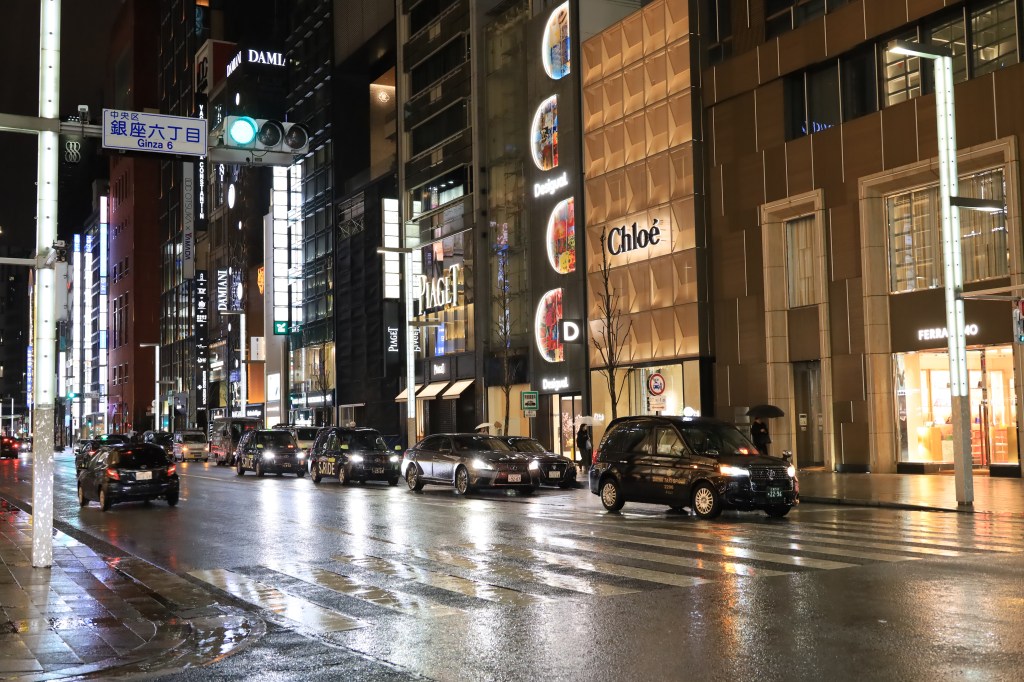
After taking a few photos around Sensō-ji, I left to check-in at my hotel and wait indoors until the rain ceased. The room was small, but it was fine as I was only staying one night. I ended up taking a nap until around 7:00 pm., as it was still pouring. I had made a dinner reservation at Rabu7 to try shabu-shabu8, and explore some bars in Ginza. I left my hotel and headed to the train station. My umbrella broke due to the strong wind, so I had to walk without it for a couple of blocks.
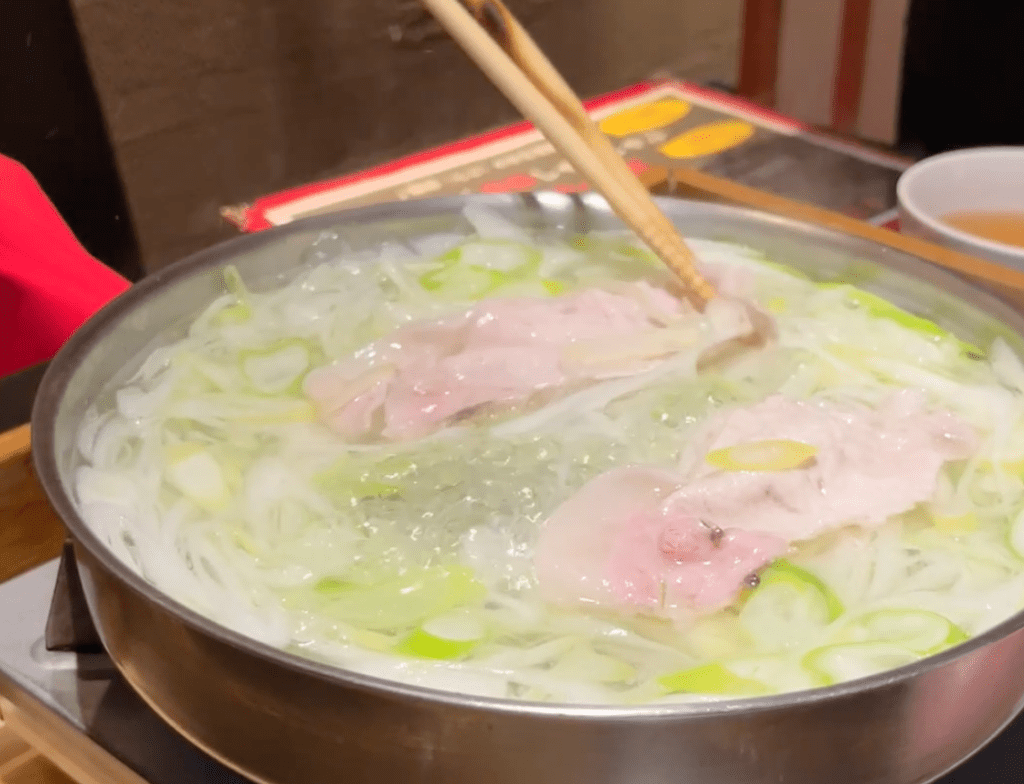
Dinner was outstanding. I was surprised by how simply water and vegetables could have so much flavour. I also had my first round of sake on this trip, which warmed me up even more. The bad weather conditions made my shabu-shabu experience more enjoyable. I left the restaurant confident I could walk around for some time in the cold weather before finding a nice bar. At this point, having enjoyed good food at restaurants with a Google rating range of 4.1-4.3, I thought anything above 4.0 would do well for a bar. I found one called Bar Ozawa9 around the corner with a very high rating, so were my expectations.
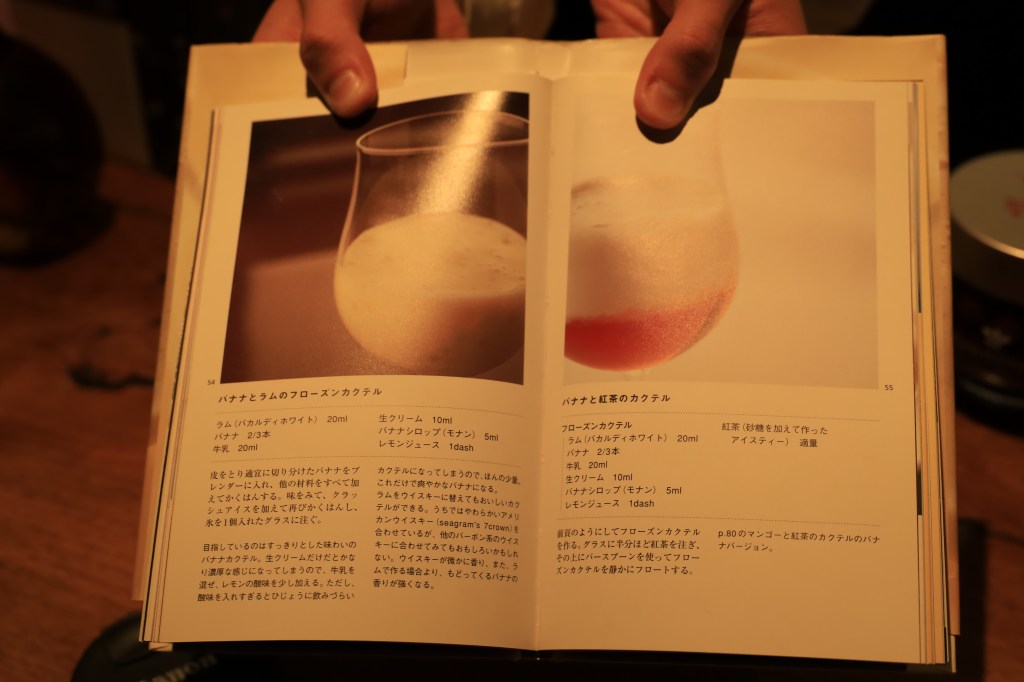
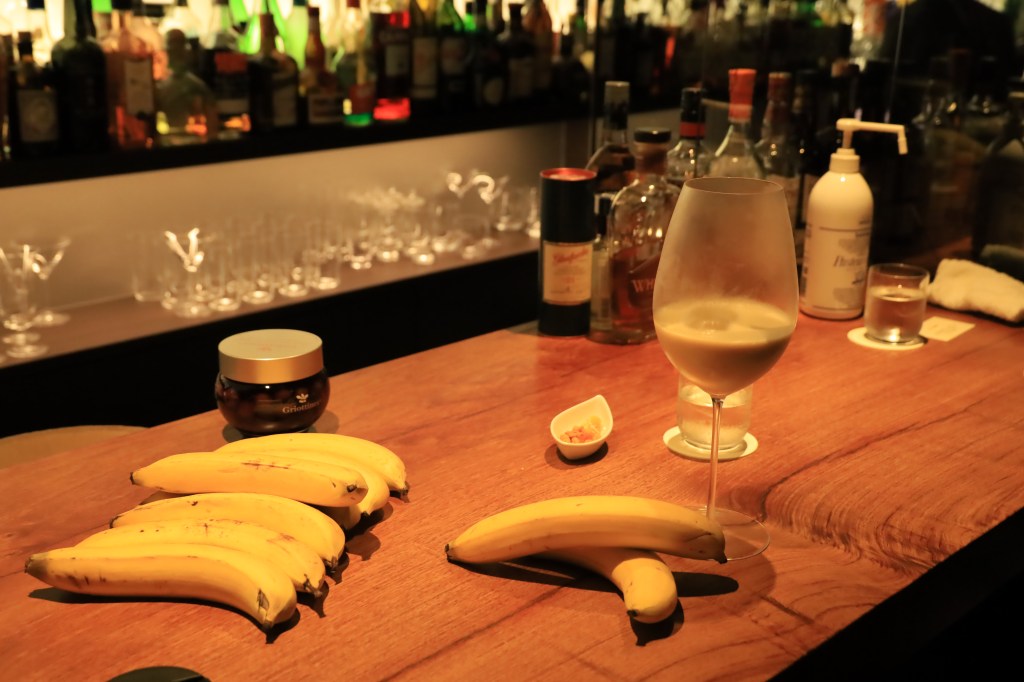
Yogi Ozawa, the bar owner, showed me more than twenty bottles when I asked him about gin-based cocktails. I asked him to make White Lady and South Side, two of my favourite cocktails. An experienced mixologist, master Yogi amazed me with his preparation skills: the fruit juice squeezing, the mixing of ingredients in the cocktail cup, the shaking, etc. Following two flawless performances, I felt relaxed after drinking well made cocktails. I noticed he had a bunch of bananas on the bar table, so I prompted him to talk about what he can do with them. His assistant showed me a book which explained how to make a banana-based cocktail. I asked master Yogi to make it. I had heard it is not easy to use banana flavours to make cocktails. Have you tried one before? Well, I hadn’t, so, he made one for me. Smooth, yet punchy. Subtle sweetness and banana flavour, yet long lasting in the palate. Perfect texture! A delight and probably the best way to wrap up my evening adventure before heading back to the hotel.
Part 1: recap and travel tips
The first couple of days were full of exploration and an overall positive impression of Tokyo (and Japan). Everything looked so advanced and cute at the same time (sounds, ads, etc.), which is a strange mix that perhaps makes people love this city. I explored different areas having a rough idea of the places I wanted to see and the food I wanted to try, without a detailed plan. General advice from friends and a fully charged phone upon setting off in the morning helped me accomplish my daily goals. Nevertheless, I list below a few tips and general information from the first half of this story. The second part will balance a bit more with some bad experiences; until then, hope you find this useful.
- Narita airport is quite far from the city. It takes around 1.5h to reach Shibuya station (arguably the most crowded area, hence a good example of city centre). You can consider flying to Haneda airport instead, which is around 45 min. from Shibuya.
- If you get lost at the airport or train station, don’t worry, staff are friendly, fluent in English, and will make sure you know what to do or where to go next.
- Fill the immigration form before arrival. That way, you’re not worried about having good signal to fill it online on your phone, or using a paper form.
- Google works generally well in Japan. Not just with directions, but with translation. English to Japanese translation seems to be quite straightforward, with less ambiguity (at least compared to Chinese). I used it to communicate to people, using the listen function to play words out loud.
- Keep your change with you. You can use coins to pay for bus and train tickets. Coin machines work very well. You’ll be surprised by how quickly they give your change back.
- If you like nightlife, going out on a Monday (or any other workday) can be surprisingly fun. Locals seem to party as if it was the weekend. I felt gutted to miss partying on a Friday/Saturday night.
- Google ratings in Japan are strict. Of course, it depends what other city you compare them too, but as a rule of thumb, a rating of 4.0 very likely represents a good place to have a meal/drink.
- Take some cash with you. I mostly used credit card, but cash can help you with transportation (metro and bus) and in other situations. Don’t forget it is universally accepted.
- As the name of my blog suggests, the information I share is based on my interaction with different people, or the things I see when I move around. ↩︎
- Another popular destination for Hong Kongers, mainly due to its proximity (less than 2 hours flight time). ↩︎
- “En la repetición está el gusto.” ↩︎
- Apparently, people who rate restaurants in Japan are more strict, so any restaurant with a rating of circa 4.0 is supposedly good. ↩︎
- https://maps.app.goo.gl/L4qgngUmkHCJ6oW4A. Google rating of 4.3, at the time I visited. ↩︎
- https://maps.app.goo.gl/6tfzLeymEsYw1v9j9. Google rating of 4.4. ↩︎
- https://maps.app.goo.gl/fWCmPyoqcpk8Nuer7. Google rating of 4.1. ↩︎
- Japanese style hotpot, which consists of water, vegetables and sliced meat that you cook in the pot and dip in different sauces. ↩︎
- https://maps.app.goo.gl/aWmFytDFv7q3hBsD6. Google rating of 4.7. ↩︎
 Pabs Explores
Leave a comment